The Chronicles
March 2012
Salutations dear readers and fellow Laurentian neighbors,
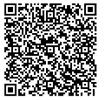 Have you ever seen one of these?
Ever wondered what it is? No, it's not an ink "splotch" (Rorschach Test) used for psychological assessment!! It's called a QR Code. QR stands for Quick Response as the information contained within can be rapidly decoded once scanned by the QR Code reader application installed in your Smart Phone or Tablet. It is the next generation of the "traditional" Bar Code. It is called a two-dimensional code because it carries its information in the vertical direction as well as the horizontal. By carrying information in both directions, a QR code can carry up to several hundred times the amount of data carried by an ordinary bar code (up to 4296 alphanumeric characters).
Let’s take a walk down memory lane just to see how QR Codes came to be. In 1948 budded the idea for a system to automatically read product information during check-out. The first use of barcodes was to label railroad cars in 1974. However, due to an economic downturn and the fact that the system was found to be easily fooled by dirt greatly affecting its accuracy, the system was abandoned. Even though the railway project had failed, around the mid-1980s a toll bridge in New Jersey requested a similar system so that it could quickly scan for cars for which a monthly pass had been purchased. Then the U.S. Post Office requested a system to track trucks entering and leaving their facilities. Finally, a pet food company asked for a simpler (and cheaper) version which could be put on their cases for inventory control. This, in turn, interested the grocery industry (the very first scanning of the UPC barcode was on a pack of Wrigley's chewing gum).Today Barcodes have become an ubiquitous element of modern civilization, as evidenced by their enthusiastic adoption by stores around the world. Other than fresh produce, almost every item in a grocery store, or department store, has a barcode on it. Mass merchandisers equally use UPC (Universal Product Code) barcodes. Finally, in 1994, a Toyota subsidiary, Denso Wave, (http://www.denso-wave.com/en/index.html) created the QR Code to track vehicles during the manufacturing process.
Fast forward to the month of June 2011. It is estimated that 14 million mobile users scanned a QR code. North American businesses, as a way to better directly interact with customers and prospects, showed a 9840 % increase between 2010 and 2011!!! Some uses for the QR Code are commercial tracking, entertainment and transport ticketing, product marketing and in-store product labeling. QR codes storing addresses and Uniform Resource Locators (URLs - Web Site addresses) may appear in magazines (e.g. to give recipes), on signs (e.g. for Real-Estate sales), on buses, in the street (e.g. to provide information about historical monuments), on business cards (aiding customers, and potential customers, to instantly learn more about a business), or on almost any object about which users might need information. As mentioned above, you use your Smart Phone or Tablet equipped with a camera and a reader application to scan the image of the QR code. Text, contact information, opening a web page and even connecting to a wireless network will result. Go ahead, try the one above if you have the equipment.
A final word. This system is FAR from being foolproof. Risks include the linking to dangerous websites, the automatic analysis of sensitive data (passwords, files, contacts, transactions), the corrupting of privacy settings, identity theft and the spreading of viruses. They are pretty much all the same issues you face by using a computer, so don't let these problems prevent you from scanning a QR Code! To those who wish to create their very own QR Code, one word of warning: QR code tampering is something being discussed on some underground forums. This means that malicious people are endeavoring to develop scripts that exploit the QR tags. Android is a particular target given its open source nature and high number of users. Right now, it is all about being vigilant, as the QR code threat, like most online threats, will evolve over time. Considering the QR Code's rising popularity, these matters of contention will be addressed very rapidly indeed!
Take good care of yourselves,
questions.monamilordi@gmail.com
This article originally appeared in Main Street – The Laurentians' English Language Community Newspaper.

